
Chives
Allium schoenoprasum
- Layer 4 · Herbaceous
- Pest repellent
Status by region
No restrictions recorded in the lists we checked.
Checked against the European Union list (Regulation 1143/2014) · Portugal's national invasive species list (Decreto-Lei 92/2019).
Information based on the cited sources, not legal advice — always confirm your local rules.
About
Native to the temperate regions of Europe, Asia and North America, it is a bulbous herbaceous plant that forms dense clumps of cylindrical leaves. In a food forest, it integrates perfectly into the herbaceous layer, where its strong aroma helps to confuse pests and the blooms attract beneficial insects. It adapts easily to various soil types and resprouts vigorously throughout the growing season after frequent cuttings.
It can be planted now — September is one of the best months.
See which trees chives grows well with
Pick the central tree on your land and see the full guild.
No account needed.
Needs
- Water: Medium
- Light: Full sun
- Size: Herbaceous up to 30 cm
- Mature diameter: 0.3 m
- Soils: Clay, Loam, Sandy, Limestone
- Climates: Atlantic coast, Inland / Continental, Hot, dry Mediterranean, Mountain / cold
Calendar
- January
- February
- March — Planting
- April — Harvest — Planting
- May — Harvest
- June — Harvest
- July — Harvest
- August — Harvest
- September — Harvest — Planting
- October — Harvest — Planting
- November
- December
- Harvest
- Planting
Medicinal use: It has antiseptic properties, improves digestion and helps lower blood pressure.
Where to buy
Grows well with
Central trees this plant has already been paired with.
Central trees worth considering
May work well together — same soil and climate, complementary layers. We have not seen this combination in a generated guild yet.
May grow well with
Suggestions worked out from growing conditions — same soil and climate, complementary layers and functions. These are not observed guilds; treat them as a starting point to try on your own land.
 Black mulberryMorus nigrasame climate · same soil · different layers · complementary functions · same exposure · same water needs
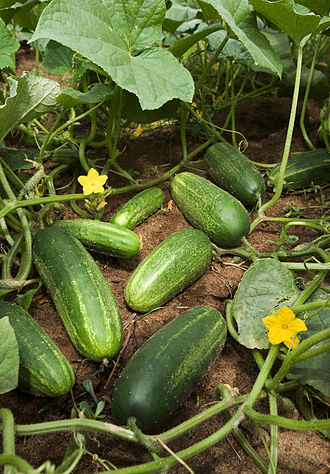 CucumberCucumis sativussame climate · same soil · different layers · complementary functions · same exposure
 English oakQuercus robursame climate · same soil · different layers · complementary functions · same exposure · same water needs
 Black walnutJuglans nigrasame climate · same soil · different layers · complementary functions · same exposure · same water needs
 Large-leaved limeTilia platyphyllossame climate · same soil · different layers · complementary functions · same exposure · same water needs
 Narrow-leafed ashFraxinus angustifoliasame climate · same soil · different layers · complementary functions · same exposure · same water needs
 Service treeSorbus domesticasame climate · same soil · different layers · complementary functions · same exposure · same water needs
 Pyrenean oakQuercus pyrenaicasame climate · same soil · different layers · complementary functions · same exposure · same water needs
Related plants
Other species in the same layer or with the same function.


It can be planted now — September is one of the best months.
See which trees chives grows well with
Pick the central tree on your land and see the full guild.
No account needed.
Not ready to map your land yet?
Get the free mini-guide to starting an edible forest.